

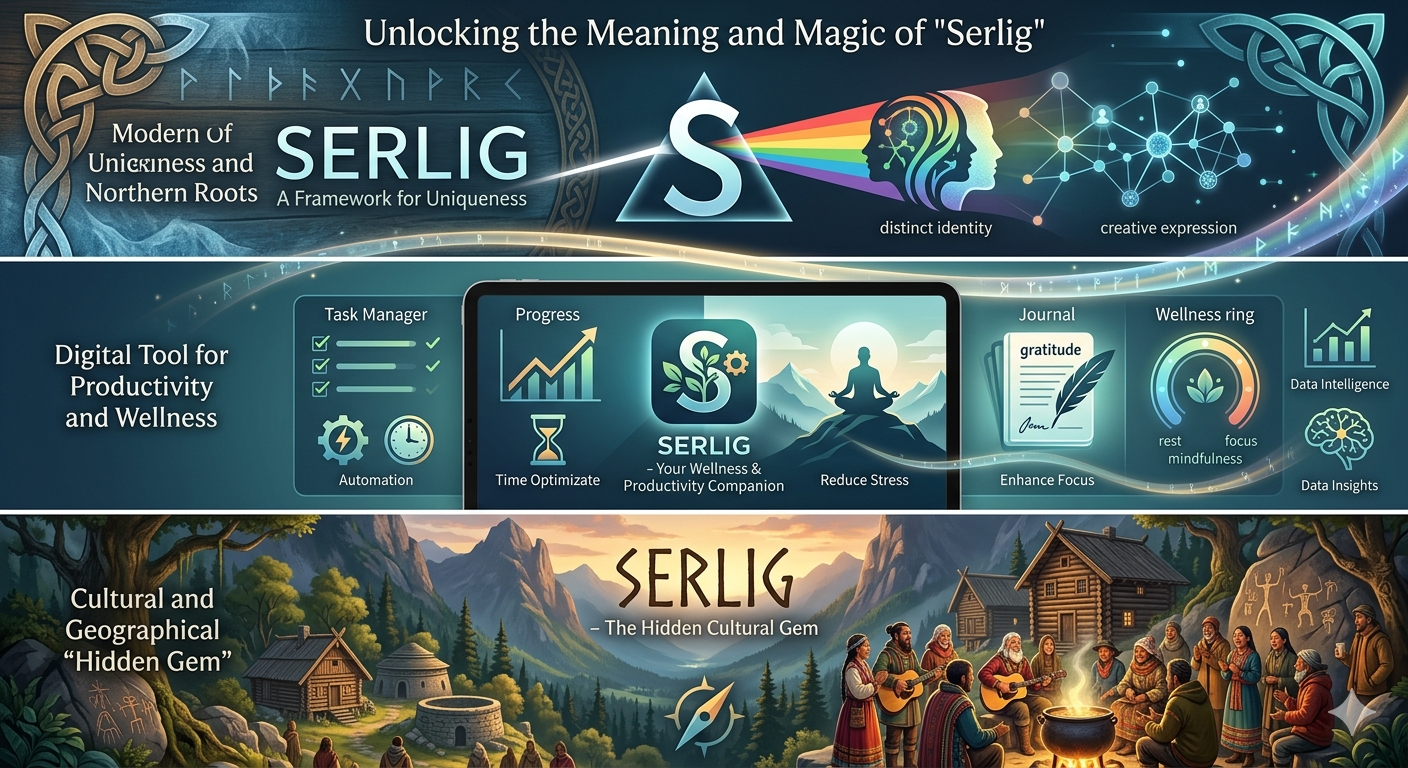
In a world filled with familiar words and predictable phrases, sometimes a term comes along that makes you pause — serlig. Maybe you’ve heard it somewhere, maybe it sparked your curiosity, or perhaps it felt like a whisper of something deeper. But what does serlig really mean? Is it just a word, or does it carry something more profound: a feeling, an energy, a concept waiting to be uncovered?
In this article, we’ll journey into the heart of serlig — exploring its essence, its potential meanings, cultural undertones, and why it’s capturing attention in creative, spiritual, and intellectual circles.
What Is “Serlig”? A Word Wrapped in Mystery
At first glance, serlig doesn’t appear in standard dictionaries. It isn’t a common English word — and that’s exactly where its intrigue begins. Some believe serlig is a coined term, created to express something unique that existing vocabulary fails to capture. Others see it as a blend of ideas, sounds, or linguistic influences.
But what if serlig isn’t just about definitions? What if it’s about experience?
Imagine a word that doesn’t just describe but evokes. A word that feels more like a mood or a state of being, rather than a rigid concept with clear boundaries. That’s where serlig begins to take shape — not just as a word, but as a notion that invites imagination.
Serlig as a Feeling: More Than Just Language
Words like happy, calm, or anxious describe emotions we already know. But serlig — on its own — feels like an invitation to define a new emotional or sensory territory.
Some people describe serlig as:
A gentle resonance — like hearing a sound that feels familiar but you can’t quite place.
A subtle presence — a mood that hovers at the edge of consciousness.
A creative impulse — something that stirs imagination without needing explanation.
In that sense, serlig isn’t just a static word — it’s an experience that encourages you to pause, feel, and explore.
Origins and Interpretations: Where Did Serlig Come From?
Because serlig is not traced to a specific language root or historical text, its origin remains speculative — and creatively fertile. People have offered different interpretations:
1. A Constructed Word
Some writers and artists use serlig as a coined term — invented to express an emotion or phenomenon that existing words fail to capture. Similar to how sonder (a feeling of realizing everyone has a life as complex as your own) entered modern lexicon.
2. A Fusion of Linguistic Sounds
It’s possible serlig emerged as a blend — perhaps from Scandinavian‑like phonetics (“‑lig” reminiscent of Germanic suffixes meaning “‑like”), giving it an innate poetic rhythm.
3. A Creative Call to Interpretation
Creative thinkers sometimes use serlig as a catalyst — a word that prompts reflection rather than definition. In that way, the meaning of serlig becomes personal: different for different people.
Whether it’s a philosophical idea, an artistic muse, or an emotional tone — serlig resists a one‑size‑fits‑all interpretation.
Why “Serlig” Matters in Today’s World
In an era where language evolves fast — shaped by social media, cross‑cultural exchanges, and a hunger for self‑expression — words like serlig thrive. They flourish because they don’t fit neatly into old categories, and because they invite engagement.
Serlig as Creative Inspiration
Writers, poets, and musicians find serlig appealing because it:
Gives freedom to imagine
Breaks away from conventional vocabulary
Encourages personal interpretation
It’s a canvas rather than a label.
Serlig in Self‑Reflection
People exploring self‑identity, emotions, and inner growth might use serlig to express moments that feel new yet familiar, subtle yet significant.
In this way, serlig becomes more than a word — it becomes a companion to introspection.
Living with “Serlig”: How to Use the Word
Since serlig doesn’t come with a fixed dictionary definition, using it becomes a creative act. Here are ways people are experimenting with it:
In Personal Expression
You might say:
“That moment felt serlig — I can’t fully explain it.”
“The evening had a serlig glow.”
Here, serlig becomes shorthand for something you feel but can’t yet articulate through ordinary language.
In Art and Writing
Artists might title pieces or describe moods:
Serlig Skies (a painting capturing an indescribable twilight)
Serlig in Soft Light (a poem about subtle emotional shifts)
In Everyday Life
Friends might use serlig playfully, as shorthand for those fleeting, beautiful, or odd moments that defy description.
In all cases, the word becomes personal — shaped by how you feel and how others respond.
Can Serlig Become a Recognized Word?
Language evolves. Words like selfie, ghosting, or clout were once unfamiliar, too. Over time, social adoption can turn a coined term into part of living vocabulary.
Whether serlig will follow that path depends on:
How widely people adopt it
How deeply it resonates with human experience
Whether it fills a linguistic gap others feel too
If serlig continues to capture imagination, it might one day show up in creative writing, conversation, or even digital culture.
Frequently Asked Questions
What does “serlig” mean?
Serlig doesn’t have a fixed dictionary definition. It’s a creative term — often used to capture moods, feelings, or moments that feel subtle, evocative, or hard to describe with existing words.
Where did the word “serlig” come from?
The origin of serlig isn’t tied to a specific language or known historical source. Many believe it’s a coined or constructed word — created to express something new, open‑ended, and experiential.
Is “serlig” a real word?
Yes — in the sense that language is alive and constantly evolving. Serlig is real as a concept, used by people who find it useful for expressing experiences that defy traditional description.
How can I use “serlig” in a sentence?
Here are some examples:
“The sunrise was unexpectedly serlig — soft and elusive.”
“She had a serlig smile, gentle and hard to define.”
“The moment felt serlig, like something just beyond words.”
Can “serlig” be part of creative writing?
Absolutely. Serlig is especially suited for poetry, prose, reflection, and expressive writing where atmosphere and nuance matter more than literal meaning.
Do others understand the word?
That depends on context. If you explain what serlig means to you, people often appreciate its evocative quality — even if they assign their own interpretations.
Conclusion
In a world overflowing with words, serlig stands out not because it’s familiar — but because it invites exploration. It resists neat definition, instead offering a space where feeling and imagination meet.
Whether serlig becomes a widely recognized term or stays a niche poetic expression, its value lies in how people use it — to describe what’s often felt but rarely spoken.
So next time you pause, sensing something tender or elusive, whisper serlig and see how it feels — maybe you’ve just discovered your own new way to name the unnamed.
 PerformancerearendsEditorialTeam